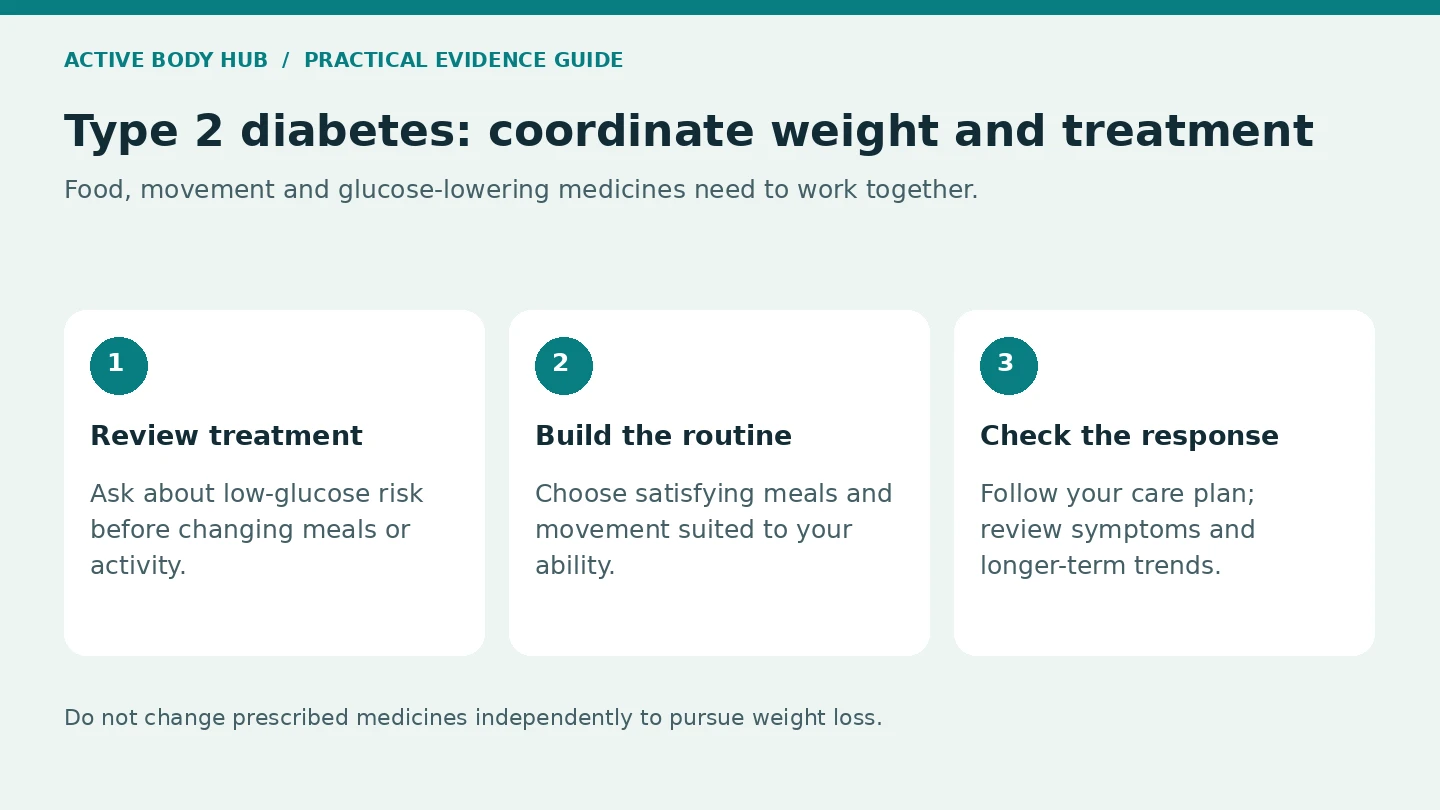
Why a generic weight-loss challenge may not fit
A plan that tells everyone to skip breakfast, remove carbohydrates, or double their exercise ignores differences in diabetes treatment. Food intake and activity can change glucose levels and medication needs. This does not mean weight management is impossible; it means the starting plan should match the treatment you actually use.
The goal is not the fastest drop on the scale. Weight loss that comes with recurrent low glucose, weakness, dehydration, or inadequate nutrition needs review. Unexplained weight loss alongside thirst or frequent urination can be a sign of poorly controlled diabetes rather than a success. Tell your care team about these changes instead of assuming a supplement or diet is working. [1]
Review medicines before changing the routine
Bring your prescription list, nonprescription products, and usual meal schedule to your clinician or pharmacist. Ask which medicines can cause low glucose, how to recognize and respond to it, and whether monitoring should change when you eat less or become more active. Keep an individualized response plan accessible. [5]
Never reduce or stop insulin or another prescribed medicine because an article suggests weight loss. Some treatments can affect appetite or weight, but the safest alternative depends on glucose control, kidney function, cardiovascular health, tolerability, cost, and access. Your prescriber can discuss options and make changes when appropriate. A supplement cannot substitute for that decision.
Create meals that are satisfying and practical
Start with meal adequacy. Include a useful protein source, vegetables or other fiber-rich foods, and carbohydrate portions that fit your care plan. Avoid treating fruit, beans, or every starchy food as automatically forbidden. The amount, food form, overall meal, preferences, and treatment context matter.
Use one ordinary day to identify the easiest improvement: sugary drinks, oversized restaurant portions, long gaps followed by evening overeating, or snacks eaten without noticing. Change one pattern first. If your plan repeatedly leaves you extremely hungry, it may need more food, better meal structure, or a smaller deficit—not another appetite suppressant.
Choose an eating pattern you can sustain
The ADA describes several patterns, including Mediterranean-style, vegetarian and lower-carbohydrate approaches. None is automatically best for everyone. Choose with your care team according to food preferences, budget, nutritional needs and treatment. A more restrictive plan is not necessarily a better fit. [6]
Adapt activity to your starting point
Choose comfortable activity you can repeat: walking, cycling, water exercise, or adapted seated movement. Start with manageable sessions and increase gradually. Include suitable strength work to support muscle and function. If you already have a post-meal walking routine, build on it instead of adding a demanding schedule that leaves you exhausted.
Diabetes-related foot problems, eye disease, heart disease, and other conditions can change which activities are suitable. Ask your care team about relevant precautions and foot care. When using medicines that can cause low glucose, follow your agreed monitoring and response plan. Stop and seek assessment for chest symptoms, fainting, or severe unusual breathlessness.
Review progress without chasing daily numbers
Choose a review interval and track a small set of useful measures: a multiweek weight trend when appropriate, walking comfort, meal consistency, hunger, sleep, and clinician-recommended glucose measurements. A laboratory A1C result reflects a longer period than a single meal or a few days of dieting. Follow your care team's testing schedule.
At a plateau, review portions, drinks, routine, water changes and treatment. Better strength and glucose management matter even with slow scale changes. Rapid loss with worsening symptoms needs assessment.
Plan for maintenance while losing weight. Keep a follow-up schedule and agree on an early response if weight begins returning. Regain is common and may call for renewed support or treatment review, rather than blame or a stronger supplement. [7]
Understand remission without expecting a cure
Some people with type 2 diabetes can achieve remission after substantial weight loss, but it is not guaranteed and is not the same as a permanent cure. Eligibility, treatment, and the likelihood of success differ. Ongoing follow-up remains important even when glucose improves. Do not stop medication to see whether you qualify.
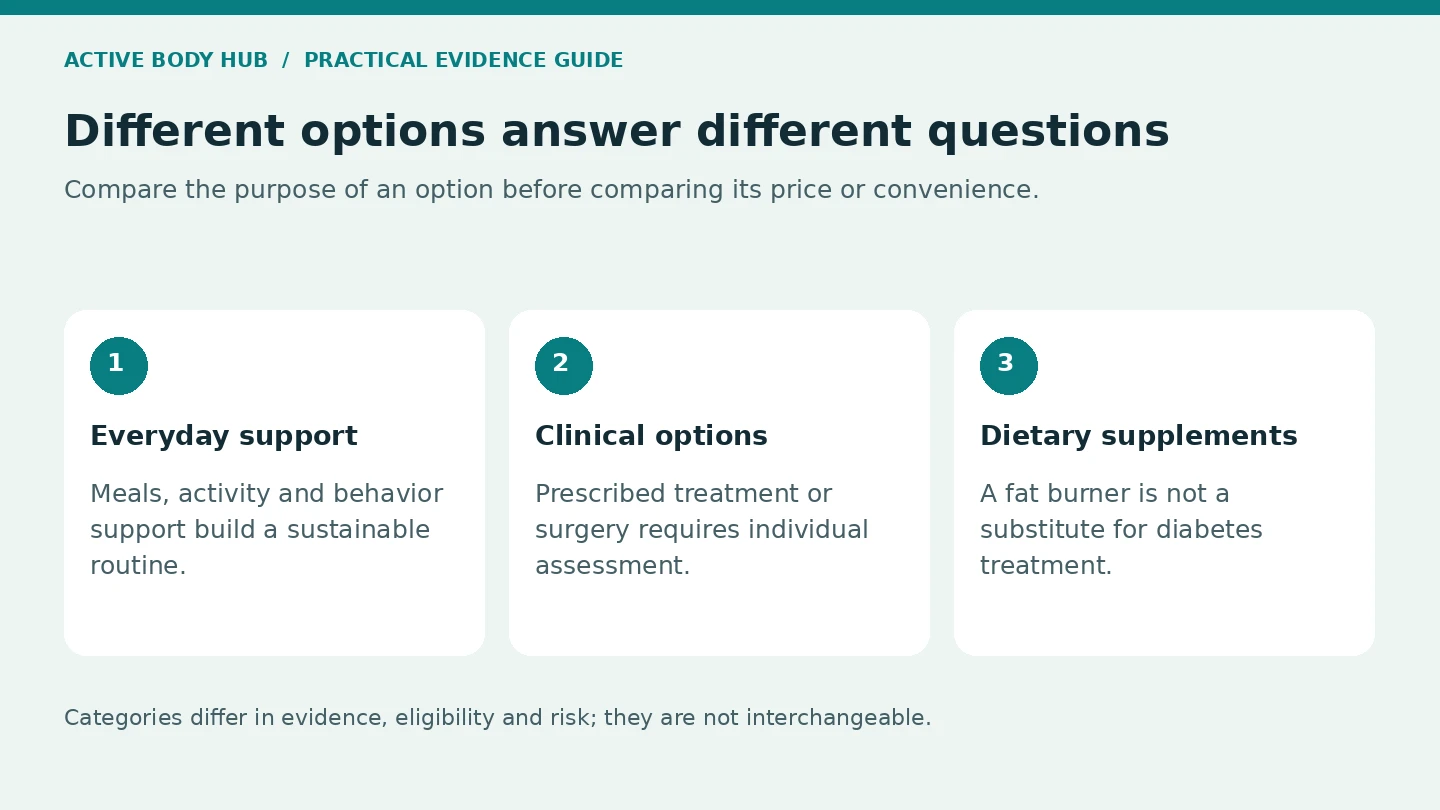
Discuss remission as a clinical goal if it is relevant to you. A structured program, specialist weight-management care, prescribed treatment, or surgery may be considered depending on individual circumstances. These options have different evidence and risks from dietary supplements. They should not be presented as interchangeable tools on a product comparison chart.
Can Fat Burn Active be part of the plan?
Fat Burn Active has no verified role as a diabetes treatment in this review. Its caffeine, guarana, bitter orange, and other ingredients create questions about stimulant exposure, tolerability, and medicine interactions. The presence of zinc or a botanical associated with glucose research does not establish that the complete product improves diabetes outcomes.
Do not add it simply because weight loss is slow. First review the actual label and your medicines with a qualified professional. If you want to examine the product, use our evidence and safety review before considering a purchase. The useful next action for diabetes may be a treatment review or a more workable meal routine rather than a supplement.
Compare the available kinds of support
Not every weight-management option has the same purpose or evidence. Discuss the following categories with your care team; this is a comparison of roles, not an individual treatment recommendation. [4]
| Option | Role | Important limit |
|---|---|---|
| Structured lifestyle support | Nutrition, activity and behavior coaching | Needs adaptation and continued support |
| Prescription treatment | Selected for glucose, weight and other health needs | Eligibility, side effects, cost and monitoring matter |
| Metabolic surgery | An option for selected people after specialist assessment | Requires procedural and long-term nutritional follow-up |
| Fat burner supplement | Optional consumer product evaluation | Does not replace diabetes treatment |
When hunger keeps defeating the plan
Record skipped meals, persistent hunger, low-glucose episodes, sleep and medicine changes across a few ordinary days. Discuss that pattern before seeking a stronger suppressant or restricting food further.
Make the next review specific
Agree on what you will try, what you will monitor and when to report back. For example, test a reliable work lunch while keeping prescribed treatment unchanged, and review hunger and completion with your care team. The example is a planning method, not a fixed meal or glucose prescription.
Explain barriers such as insurance, appointments, food access and medication costs. Choose a workable plan rather than an ideal option you cannot obtain or sustain.
Choose the next useful guide
For everyday activity, read our post-meal walking guide. If you are considering a fat burner, first review the safety questions with diabetes.
Frequently asked questions
Should I skip insulin to make weight loss easier?
No. Do not skip or change prescribed treatment for weight loss. Discuss weight concerns with your prescriber so treatment and nutrition can be reviewed together.
Is unexplained weight loss a good sign?
Not necessarily. Weight loss with increased thirst, frequent urination or feeling unwell needs medical assessment rather than celebration as a dieting result.
Can a fat burner replace a diabetes medicine?
No. A stimulant-containing supplement is not an interchangeable alternative to prescribed diabetes care.
Sources and editorial notes
- NIDDK: Healthy Living with Diabetes
- NIDDK: Achieving Type 2 Diabetes Remission through Weight Loss
- NCCIH: Diabetes and Dietary Supplements
- ADA 2026: Obesity and Weight Management
- NIDDK: Low Blood Glucose
- ADA: Eating for Diabetes Management
- NIDDK: Maintaining Weight Loss with Diabetes
Prepared with AI assistance and source verification by Active Body Hub. No clinical review, personal product use or laboratory testing is claimed. Sources checked October 25, 2026. Manufacturer information establishes label facts, not independent evidence of efficacy. This article concerns adults and type 2 diabetes or prediabetes; it does not provide type 1 diabetes treatment instructions.