What prediabetes means for your next decision
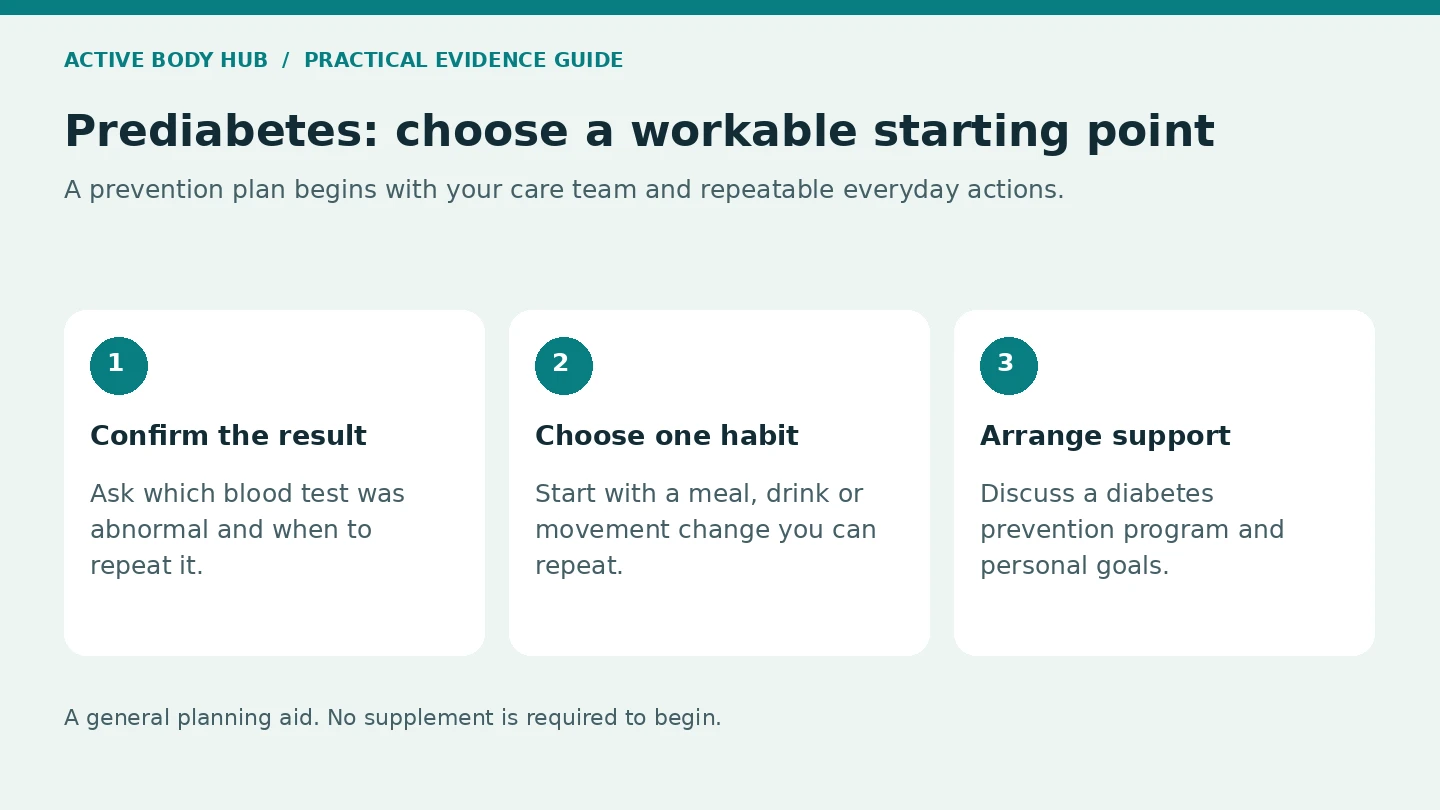
Prediabetes means blood glucose is above the normal range but below the range used to diagnose diabetes. It often has no obvious symptoms. A clinician interprets validated blood tests alongside your health history; belly size, cravings, tiredness, or an online questionnaire cannot confirm the diagnosis. Ask which test was abnormal, whether confirmation is needed, and when you should be retested.
The immediate problem is usually uncertainty: should you cut out every carbohydrate, exercise hard, or buy something advertised for metabolism? Trying all three at once can create hunger, fatigue, and expense without a plan you can maintain. A better first step is choosing one measurable food change and one manageable movement change while arranging follow-up. [1]
Set a useful goal without demanding perfect results
NIDDK describes losing 5 to 7 percent of starting weight as a prevention strategy for people with excess weight. At 200 pounds, that is 10 to 14 pounds. [1] This is an initial planning range, not a promise that everyone will avoid diabetes or a requirement to lose the weight quickly. Your clinician may recommend a different target based on age, function, medicines, and other conditions.
Track habits and walking comfort alongside weight. Compare several weeks rather than one morning because water and other short-term changes affect the scale. If weighing increases distress, choose other measures with professional support.
Build meals around a repeatable structure
Keep familiar foods and change their balance. Include a protein source, fiber-rich plants, and a carbohydrate portion that suits your needs. Beans, vegetables, fruit, whole grains, eggs, fish, tofu, and plain dairy can all fit depending on preference and tolerance. There is no single menu that everyone with prediabetes must follow.
Begin where the change is easiest to sustain. Replace a daily sugary drink, prepare a reliable work lunch, or portion a calorie-dense addition instead of banning an entire food group. A plate with vegetables, a protein source, and a suitable starch is a planning aid, not a prescription. A dietitian can adapt portions to your culture, budget, appetite, and medical needs.
Make movement smaller and more repeatable
If you are inactive, start below your maximum. A short comfortable walk after a meal or a few breaks from sitting may be easier to repeat than an ambitious gym schedule. Build duration gradually and include suitable muscle-strengthening activity when you can. A common prevention-program goal is at least 150 minutes of moderate activity per week, reached progressively rather than demanded on day one. [2] Movement supports health even before the scale changes substantially.
Discuss exercise adaptations if you have heart symptoms, major breathlessness, foot problems, severe joint pain, or another limiting condition. Chest pressure, fainting, or severe unusual breathlessness deserves prompt assessment. If you use a medicine that can cause low glucose, ask your care team how food, activity, and monitoring should work together rather than copying a generic exercise challenge.
Use a two-week starting plan
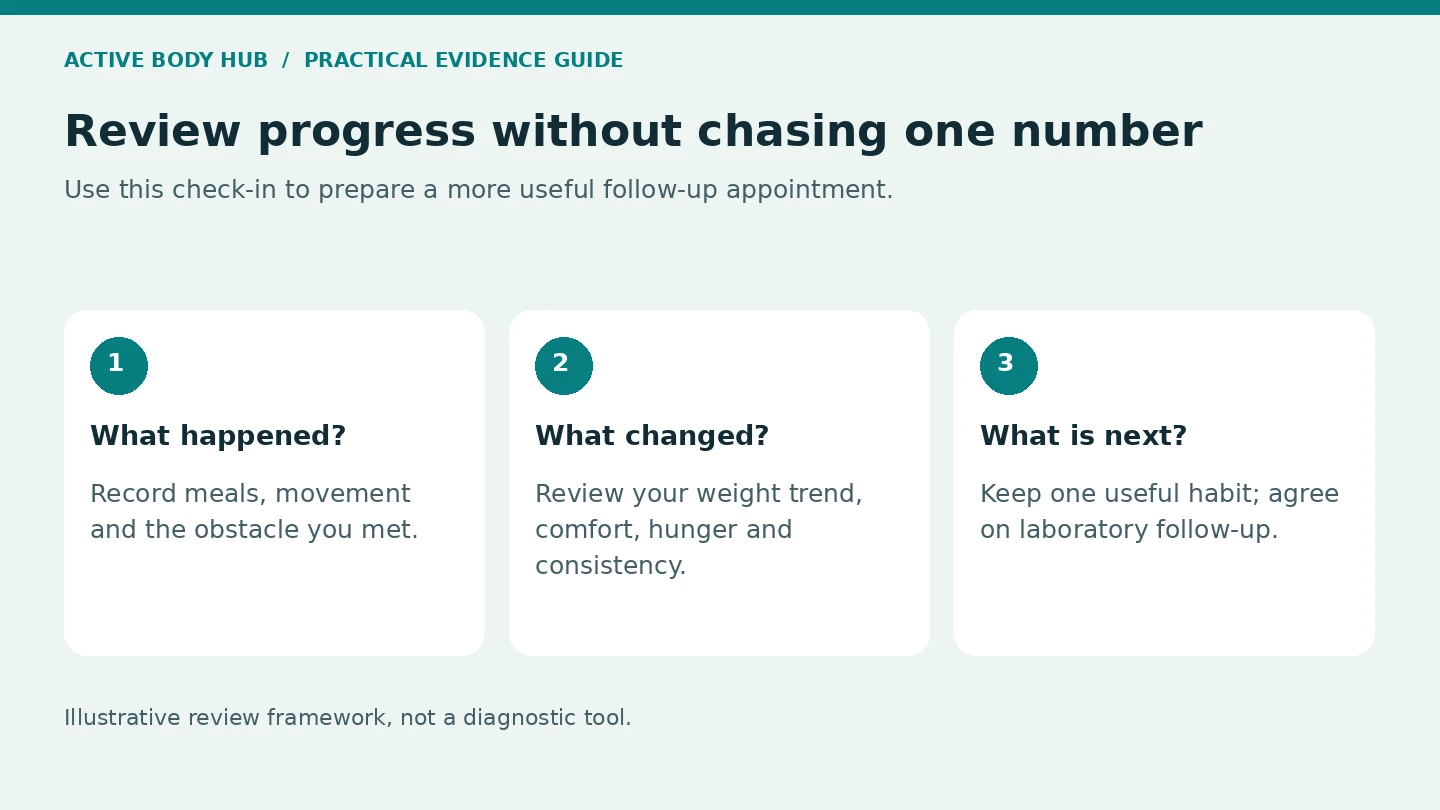
During the first three days, write down your usual drinks, meal times, walking opportunities, and biggest practical barrier. Choose one change you can perform on a difficult day. For example, bring a prepared lunch on three workdays and take a comfortable short walk after dinner when conditions allow. Keep the plan modest enough to learn from it.
After two weeks, review consistency, hunger, sleep and obstacles. Adjust one problem. A few days cannot establish a long-term glucose response; agree on laboratory follow-up and ask about a prevention program.
Where Fat Burn Active fits—and where it does not
Fat Burn Active is not an established treatment for prediabetes. Ingredient studies cannot show that its complete formula prevents diabetes, and feeling more alert does not demonstrate better glucose control.
No fat burner is required for this plan. If you already intend to evaluate one, take the current label and medicine list to a clinician or pharmacist. Use our safety guide to understand the questions rather than substituting a supplement for prevention care.
Questions to take to your appointment
Ask which result shows prediabetes, when to repeat it, and what goal and support fit your situation. Bring your medicine, supplement and drink list. Mention sleep difficulties and practical barriers.
If thirst, frequent urination, blurred vision, or unexplained weight loss develops, arrange medical evaluation rather than waiting for a weight-loss plan to work. Symptoms can have several causes, and an article cannot identify yours. Keep the next step concrete: a follow-up date, one food habit, and one achievable activity habit.
Start with the test, then choose the goal
US diagnostic ranges help explain what your clinician is checking. They are laboratory criteria, not a way to diagnose yourself from a single home-meter reading. Ask whether anything could affect interpretation of your result, and how follow-up will be arranged. [4]
| Test | Prediabetes range |
|---|---|
| A1C | 5.7%–6.4% |
| Fasting plasma glucose | 100–125 mg/dL |
| Two-hour oral glucose tolerance test | 140–199 mg/dL |
These numbers answer a different question from your weight goal. Someone at a healthy weight may need a plan for food quality, activity and monitoring rather than a weight-loss target. If weight loss is appropriate, use starting weight × 0.05 to 0.07 to understand the initial 5%–7% range; discuss the target rather than treating it as a compulsory deadline.
If lifestyle changes are not enough or your risk is higher, ask whether metformin or other clinician-led weight care is relevant. The choice depends on your circumstances; news about a weight-loss medicine is not evidence that a supplement has the same effect. [1]
A practical appointment note
Write four lines before your visit: my confirmed test and date; my usual workday meals; the movement I can manage comfortably; and the barrier I most want help with. Add medicines and supplements. This keeps the conversation focused on a routine you can sustain instead of an ideal menu that does not fit your life.
A structured prevention program adds coaching, follow-up and problem-solving. It is different from downloading a meal list and being left to manage alone. Ask about local, remote or technology-assisted options, eligibility, cost and session times. Choosing support that fits your schedule can be more useful than buying another metabolism product. [5]
What to read next
For the relationship between glucose and weight, read our insulin resistance guide. If you are already considering a supplement, use the diabetes safety checklist before evaluating a product.
Frequently asked questions
Can I improve prediabetes without losing a large amount of weight?
Appropriate activity and eating changes are useful starting points. For people with excess weight, a modest sustained reduction can lower risk. Individual goals depend on health and treatment; normal-weight readers should not assume they need to lose weight.
Do I have to remove every carbohydrate?
No single eating pattern suits everyone. Portions, food quality, preferences and consistency matter. Ask for a plan you can sustain instead of using a universal ban.
Does Fat Burn Active reverse prediabetes?
The evidence reviewed does not establish that outcome for the finished product. Do not use it as a substitute for follow-up testing or a prevention plan.
Sources and editorial notes
- NIDDK: Preventing Type 2 Diabetes
- NIDDK: Diabetes Prevention Program
- NIDDK: Healthy Living with Diabetes
- NIDDK: Recommended Tests for Identifying Prediabetes
- ADA 2026: Prevention or Delay of Diabetes
Prepared with AI assistance and source verification by Active Body Hub. No clinical review, personal product use or laboratory testing is claimed. Sources checked October 25, 2026. Manufacturer information establishes label facts, not independent evidence of efficacy. This article concerns adults and type 2 diabetes or prediabetes; it does not provide type 1 diabetes treatment instructions.